

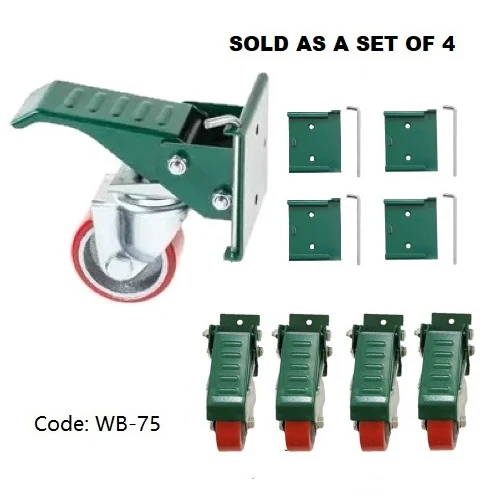
Castors are essential components used to facilitate the movement of equipment and machinery across various environments. They are widely found in industries ranging from healthcare and warehousing to office settings and industrial machinery. A castor is essentially a small wheel attached to a mounting system that enables smooth rolling of an object, reducing friction and wear on floors while enhancing operational efficiency. Understanding the different types and features of castors is key to selecting the right one for your needs.
Types of Castors: Fixed vs. Swivel
The most basic distinction in castor types is between fixed and swivel models. Fixed castors are designed for movement in one direction, allowing for stability when objects need to travel along a defined path. This type is often used in situations where the direction of movement is predictable, such as along aisles or corridors.
In contrast, swivel castors provide greater flexibility by rotating in all directions, enabling easy navigation through tight spaces. This type is particularly useful in dynamic environments like warehouses or healthcare facilities where equipment needs to be maneuvered in various directions. Choosing between fixed or swivel castors depends on how and where the equipment will be moved.
Material Choices for Different Applications
Another important consideration when selecting castors is the material of the wheel, as different materials perform better in different environments. Polyurethane castors are popular because they are durable and gentle on floors, making them ideal for environments where noise reduction and smooth movement are priorities, such as office spaces or retail areas.
For environments exposed to chemicals, nylon castors provide excellent resistance to harsh substances, making them suitable for laboratories, factories, and other industrial settings. For heavy-duty applications, such as transporting large machinery or industrial equipment, metal castors made from steel or cast iron are the best choice. These castors can handle higher loads but may cause noise and wear on floors, so they are often paired with protective mats.
Castors in Various Industries
The versatility of castors extends across multiple industries. In healthcare, castors are vital for the smooth and safe movement of hospital beds, trolleys, and medical equipment, ensuring that they can be quickly moved from one location to another. Castors designed for healthcare applications are usually quieter and feature a smoother, softer tread to minimize disturbances in patient care environments.
In warehouses and logistics, heavy-duty castors are often used to support material handling equipment, including carts, pallets, and storage racks. These castors can support significant weight and allow for easy transportation of goods across long distances.
In offices, castors are frequently used in office chairs, filing cabinets, and movable desks. They not only make it easier to reposition furniture but also help in reducing wear on floors, particularly when the furniture is frequently moved.
Selecting the Right Castor for Your Needs
Choosing the appropriate castor requires an understanding of the application’s specific needs. The most important factor to consider is the load capacity of the castor. The total weight of the object being moved, including any additional loads it may carry, should determine the load rating of the castor. It’s advisable to select a castor that has a higher weight capacity than the expected load to ensure durability and safety.
The diameter of the castor wheel also plays a role in determining how easily the castor will move. Larger wheels can handle uneven floors, thresholds, and obstacles better than smaller ones, and they reduce the effort required to move heavier loads. Additionally, the tread material affects rolling resistance, noise, and the smoothness of movement. Soft materials like rubber or polyurethane absorb shock, while harder materials are more durable but may generate more noise.
Mounting and Installation
Another factor to consider is how the castor is mounted. Top plate castors are widely used and secured to the equipment using screws. They are suitable for heavier-duty applications and offer solid, stable mounting. Stem castors, on the other hand, are often used for lighter applications and can be quickly inserted into sockets on items like office chairs and small furniture.
Conclusion
Castors are small but integral components that support efficient and safe movement in a wide range of applications. Whether you’re selecting castors for office chairs, medical equipment, or heavy-duty industrial machines, understanding the types, materials, and mounting options will help ensure that you choose the right solution. By carefully considering the load capacity, wheel size, and material type, you can maximize the performance and longevity of your castors, ensuring smooth operation across various environments.